A personal blog

  • 5 powerful ways to leverage Trello for church

    Trello, the digital Kanban and project management software, is all the rage for personal productivity and collaborative project management. Its simple and intuitive interface combined with clever features and powerful integrations with other services have rightly caused it to ascend to the upper echelon of similar tools. The more I use Trello for church, the more excited I get about the possibilities.

    If you’ve never checked out Trello, now’s the time. Before you go on with these tips, you might want to read my brief primer.

    Here’s how you can leverage the power the Trello for church:

    1) Collaborative task management. I’ve set up a simple shared board  between me (the rector of my church) and my administrative assistant with the following lists:

    • Todo
    • Doing
    • Done
    • Resources

    All of those are pretty self-explanatory. I add stuff to the Todo list and my assistant moves it to the appropriate list. I clear out the done list after reviewing every week or so.

    The Resources list has links to some of the other systems we use and attachments for quick reference.

    2) Leadership onboarding. I am in the process of working through exactly what this should look like for us, but you can easily put together a Trello board with essential information for new leaders. Possible lists could be:

    • Team/Staff – with a card/photo for each person on staff
    • HR Docs
    • Policies
    • Church docs – constitution, bylaws, etc.

    3) Internal calendar planning/brainstorming. Make a board for the year and list for each month. Add events as cards and drag them around as needed during your brainstorming sessions.

    4) Worship set planning. Worship leaders can make a Trello board with a list for each Sunday and card for each song. Drag and drop makes it easy move stuff around as needed in the set, and you can also attach chord sheets, etc to the cards for band members or other leaders.

    5) Sermon series planning. Create a board for your series with lists for each week/sermon/talk, and add cards for things like:

    • Preacher
    • Main passage
    • Theme
    • Title
    • Song ideas
    • Graphics

    You’ll have everything in one place and can easily share and collaborate with your team as needed.

    The flexibility and power of using Trello for church means that you’re only limited by your own creativity when it comes to streamlining your church’s processes and communication.

    The best part about using Trello for church?

    You can do everything I’ve outlined above absolutely free. Upgrading will get you a some extra perks when it comes to backgrounds and integrations, but it’s not at all necessary to get started with this amazing tool for ministry.

    Did I mention their mobile apps are free and awesome, too? You’ll have all this stuff at your fingertips when on the go.

    I hope this post has been helpful in giving you some ideas on how to use Trello to level up your planning, organization, and collaboration in your own church context.

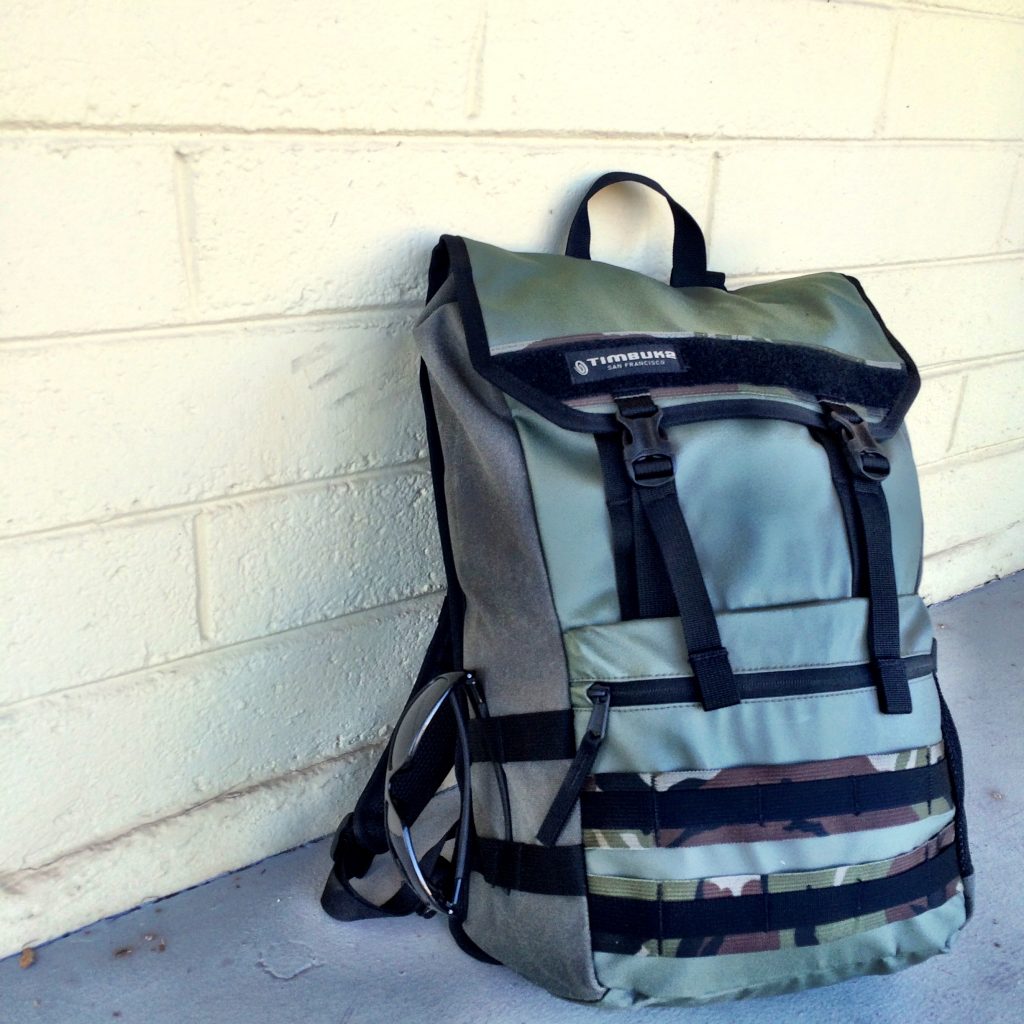
  • The Timbuk2 Rogue Laptop Backpack for travel & every day carry

    I like backpacks. It’s a weakness. I can often obsess over finding the perfect pack, and I own way more than I really need. Moreover, I gravitate toward the expensive ones.

    A little over a year ago I gave away two other daily carry type backpacks. Short on cash, but needing a way to haul gear around town during the day and around the country on short trips, I reluctantly started looking for something cheap. (more…)

  • How I’m Getting Things Done with Field Notes


    Field Notes are the clever, collectible (and thus, a bit addictive), design-focused notebooks that all the bloggers rave about. They really are fun, fairly affordable, and quite useful.

    I use my Field Notes as my pocket notebook. It goes where I go to capture thoughts and ideas while out-and-about. I also use them to plan out my day.

    When I’m disciplined, it goes like this:

    • At night, I’ll prepare the page for the next day by writing the day of the week, month, date, and liturgical feast if applicable at the top of the page.
    • Right below that I will write down the readings for Morning and Evening Prayer for the Daily Office.
    • On the left side of the page, I will list the most important things I’d like to get done for the day (no more than six usually). As the day goes on I just capture item below that to make a running list.
    • On the right side of the page I’ve started making a simple daily agenda from 9-5 with any hard commitments I’ve made so I can see my day at a glance and add to it as necessary.

    I’ve used Patrick Rhone’s Dash/Plus system (similar to Bullet Journal) as a quick way to indicate meta info on each list item.

    I use a Pilot G2 .07 mechanical pencil to write in my FN, which I love, because the metal tip retracts when not in use, making this a pocket-friendly pencil.

    If you want, you can get tons of nice covers for your Field Notes, but they’re fine without, as long as you are okay with your notebook developing some character. I like having a bit of extra protection for my notes, so I had a cover custom made from this Etsy shop.

  • How I’m Getting Things Done with Trello

    For context, you’ll want to read Say hello to Trello, a new tool to organize your life and ministry

    I have a “team” in Trello called Trusted System. Within that team I have six boards:

    • Next
    • Projects
    • Tickler
    • Someday/Maybe
    • Reference Lists
    • Horizons & Areas of Focus

    Next

    My Next board has four lists of cards:

    • Inbox – for throwing stuff in as go throughout my day
    • Waiting for  – anything that needs to get done ASAP but I’m still waiting on someone else’s action (reply to an email, etc)
    • Next – Stand alone physical next actions ( for example “move bookshelf from living room to hall nook”)
    • Agendas – One card containing a list of things to talk about, per person need. There’s always agenda cards for my wife, bishop, associate pastor, administrative assistant, plus a few others as needed.

    I use Trello color-coded “labels” for contexts. My contexts are:

    • Home
    • DMAC (the church I pastor)
    • Read
    • Phone
    • Errands
    • Anywhere
    • Laptop

    Projects

    My Projects board contains anything that that requires more than one physical next action. As I review this board every week, I add physical next actions to my next board. I have two lists on this one:

    • Current – Projects that are active
    • Pending/Delegated – Similar to “Waiting for” on my Next board.

    Reference Lists

    This is a pretty flexible board that just contains any lists I need on regular basis for reference. Mostly just packing lists as this point.

    Someday Maybe

    My Someday Maybe board has six boards, each with stuff I’d like to do eventually, but are not at all pressing. As I review this I move these things to the appropriate places on my Projects or Next boards. My lists are:

    • Personal Projects
    • DMAC (the church I pastor)
    • Writing
    • Stuff to buy
    • Home & Family

    Tickler

    This functions as a complement to my physical tickler file and my digital calendar. It is made of four lists:

    • January – March
    • April – June
    • July – September
    • October – December

    As I go through the year I drag the current quarter to the left so it’s always the first one I see. I use this to put date-specific reminders, files/confirmation numbers I’ll need etc.  This is for stuff that needs to happen around a certain date/month, but is not set in stone. So “schedule eye exam – January” I’ll just throw in January-March. When I review this board, I’ll move stuff to the appropriate place as needed: Projects, Next, or my calendar.

    Horizons & Areas of Focus

    This board is made up five lists. The first list is Mission and Core Values. The first card contains my personal mission statement:

    “Help others discover and grow in the great love of God.”

    Below that I have a card for each of my core values:

    • Spirituality
    • Family
    • Fellowship
    • Fun
    • Service
    • Stewardship
    • Creativity
    • Rest

    In each of those cards I have a list of core habits I try to cultivate. So in the “Stewardship” card I have:

    • Spend less than I make
    • Exercise at least 3 times per week
    • Review calendar weekly

    The other lists are “areas of focus” or “spheres of life.”

    • Husband
    • Father
    • Parish Priest
    • Musician

    Each of those lists has four cards:

    • Desires – Specific ideas of what I want to be like in these areas
    • Actions – Concrete ways to move toward the vision (no more than 3 at a time)
    • Challenges – Thinking ahead to possible obstacles
    • Vision – A description of  the big-picture “end result” in each of these areas
  • If you’d like humility, try praying for it.

    God gives grace to the humble. Are you developing the virtue of humility?

    This old Christian prayer–in a form of repeated petitions called a litanyhas challenged many, including me. I believe if you pray these things honestly, God will grant your request in his time. It is especially appropriate for the Lenten season; it is combined here with a prayer from my own Anglican tradition. (more…)

  • Why I observe Lent

    I had been in an emotional and spiritual struggle for years, processing how the Body of Christ could be so defined, so marked, by division, quarrels, and willful ignorance of each other. My spiritual journey had led me right into the middle of some of those painful internal wars, and I hadn’t escaped without getting hurt.

    My wounds weren’t gaping open, but they were profound. I left them largely untreated because they were–at first–easy to ignore. They became infected with a certain amount of bitterness, anger, and cynicism, almost without me being aware of it.

    Something happened to me, however, on Ash Wednesday of 2011. Baptists, Anglicans, Pentecostals, Non-Denoms all gathered together. I saw the auditorium filled with Christians with deep disagreements over theology and practice nevertheless admitting to one another their deep need for a savior, their total moral, emotional, intellectual, spiritual bankruptcy apart from the Cross of Christ and the promise of his Resurrection.

    For a brief 2 hours, I saw the Church, not in perfect unity, yet nevertheless walking together toward Jesus. For the first time in a long time I thought she looked like the Bride of Christ. Hope sparked.

    As we received Communion it was as if that spark turned into a roaring fire, and I found my hardened heart couldn’t stand it. Just like that, the bitterness, anger, and cynicism melted away and–in a word–I was healed of my old injuries.

    I had hope once again that Jesus will in the power of the Holy Spirit make his Church what she is meant to be.

    To me, this is the power of Ash Wednesday and Lent: making space to remember that at the end of the day, all our hope is in Christ, and we will never hope in vain.

  • How to win spiritual battles

    In Paul’s ending to his letter to the Ephesians, he talks about how to defeat the powers of evil and darkness. We have take up the whole armor of God.

    We have to take it up. Surely the armor of God is a gift, and we would have any of it without God, but Paul says we have to take some initiative. We have appropriate it, practice it, put in on. We have to make the choices to accept the gifts of protection that God has given.

    And it’s no coincidence that the metaphor here is a full set of armor, each piece designed to work with the others. Each item is crucial, and with out even one, the whole solider would be compromised. That’s why he says take up the whole armor.

    So what is the whole armor of God? Let’s survey these briefly in the order they appear: (more…)

  • Who are you fighting?

    In Paul’s famous passage in Ephesians 6:10-20 on the armor of God, he makes a big deal about letting us know who we’re really fighting when it comes to the battles of the Christian life.

    So who are we up against? This is crucial. You’ve got to know your enemy to be able to fight them effectively. Paul tells us that our struggle is not against flesh and blood (by which he means human beings) but rather “against the rulers, against the authorities, against the cosmic powers of this present darkness, against the spiritual forces of evil in the heavenly places.”

    Spiritual forces of evil, people. In other words, the devil and his demons. In our hyper naturalistic culture this kind of language seems pretty strange, but there’s no way to get around what Paul is saying here. If he’s right (and I believe he is), there are forces at work beyond that which is immediately visible to us.

    This has important implications.

    It means that as we look at the world, the things we perceive as our enemies are not in an ultimate sense what we are fighting.

    It means that ISIS is not ultimately our enemy. Politicians and presidents are not ultimately our enemies.

    These are pawns only of greater, spiritual powers that desire violence and oppression not only for Christians, but for anyone they bring under their influence.

    I say this because we give much attention to to the terrorists and the kings of this world, but if we only ever deal with the pawns, solving earthly problems with earthly means we will not make significant headway against the evil powers and principalities of the spiritual realm.

    What Paul is saying here is that you have to take the battle past what you can see…and start fighting even the things you can’t see. 

    Stay tuned for more.

  • That time my mother-in-law demolished me at paintball

    A few years ago Amber’s side of the family decided it would be a great idea to get together around Thanksgiving. And at this family get together, it was decided we would play a rousing game of paintball.

    If you have ever played paintball you know it’s really is a lot of fun. Here’s the thing though: paintballs hurt! They’re being shot from a gun, usually powered by compressed gas, at a really high velocity! Well it’s not like I’m a pro paintball player or anything so I wore some grubby clothes and dutifully donned the protective eye mask from the facility. Then I went out to do battle with my inlaws.

    [Let me pause here. Some of you have met my mother in law right? I mean, she’s saint. If you know Kristy, you can’t imagine her hurting a fly, am I right?] (more…)