🍿 Introduced Ang Lee’s Hulk to my son today. We agreed that it holds up well as a thoughtful and character-driven superhero film. We loved the visual style that really sought to capture the feel of a horror comic.

🍿 Introduced Ang Lee’s Hulk to my son today. We agreed that it holds up well as a thoughtful and character-driven superhero film. We loved the visual style that really sought to capture the feel of a horror comic.
St. Paul said,
“…the free gift is not like the trespass. For if many died through one man’s trespass, much more have the grace of God and the free gift by the grace of that one man Jesus Christ abounded for many.” (Romans 5:15, ESV)
Adam’s sin spread to every human because the fundamental relationships between humans were irreparably broken in that instance. We fell down a hole that we could not dig ourselves out of.
Christ’s salvation spreads to every human because his act of forgiveness does the exact opposite. As we simply trust in Christ, he empowers and energizes every person to follow him in forgiveness in the Spirit.
Humanity is being healed and hauled out of the graves we have dug for ourselves.
“Therefore, as one trespass led to condemnation for all men, so one act of righteousness leads to justification and life for all men.” (Romans 5:18, ESV)
Thanks be to God!
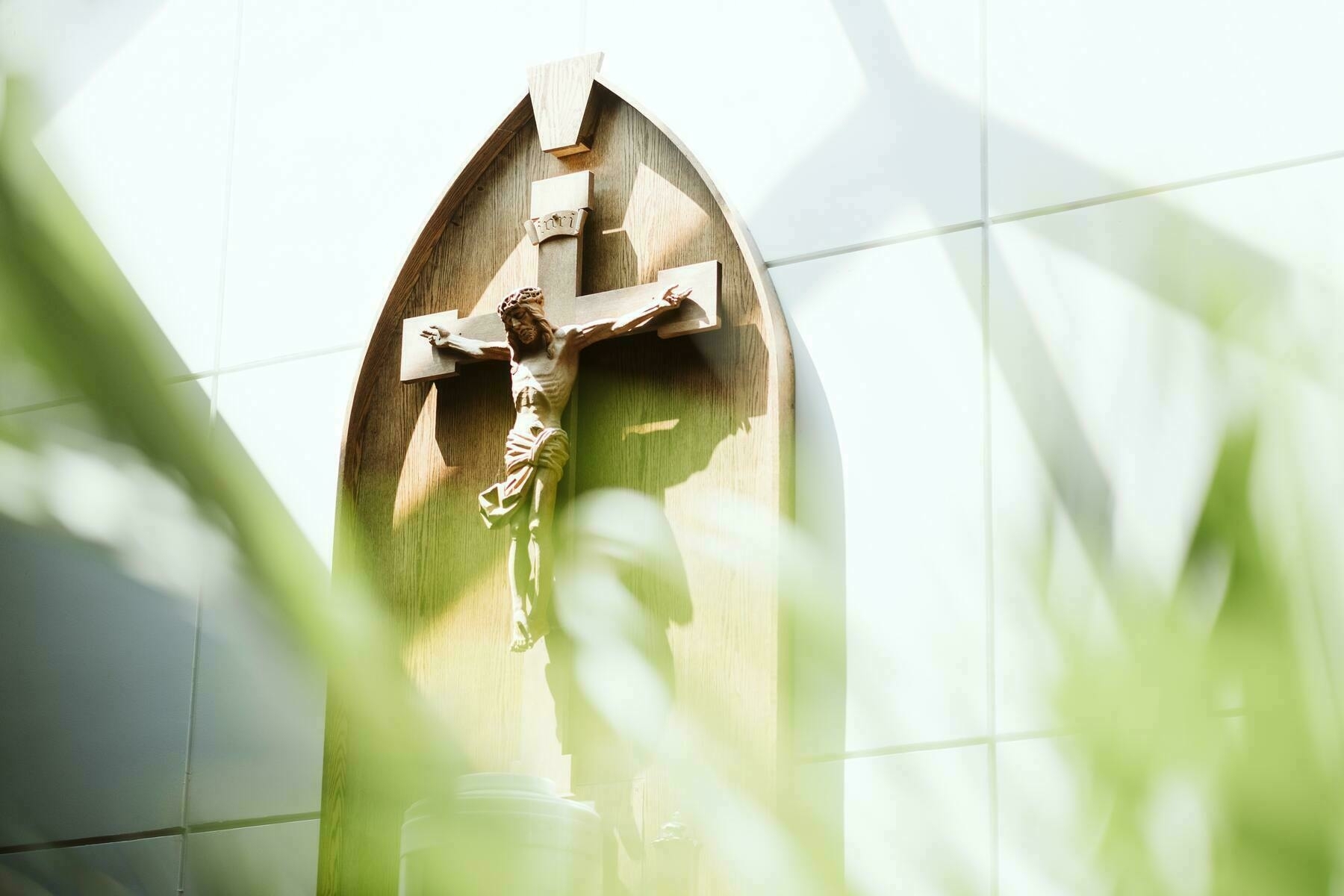
To be honest, many people do misunderstand the cross, and think of it as some kind of divine child abuse, as if the suffering of Christ in itself instead of the compassion of Christ in and through suffering is what pleases God.
Yet even when framed correctly, as the act of self-sacrifice, love, forgiveness, and redemption that it is, it remains “… a stumbling block to Jews and folly to Gentiles,” (1 Corinthians 1:23, ESV)
Why? I think because story of the Cross told simply and faithfully is a story about humanity’s inability to save ourselves, to lift ourselves completely out of our worst tendencies. The story of the Cross says everyone needs to be taught and transformed in order to live. The story of Cross says human beings don’t know how to live apart from God, because it is impossible to live apart from God. The story of Cross says all the wisdom of humanity is nothing compared to one simple and perfect act of divine love.
God’s ways have always been simple: “He has told you, O man, what is good; and what does the LORD require of you but to do justice, and to love kindness, and to walk humbly with your God?” (Micah 6:8, ESV)
We can do a lot as human beings: we can go to space, cure many diseases, discover much of the world and build all kinds of great wonders, but what we can’t seem to do without help is live in harmony with God and each other. The world still seems awfully short on justice, often unwilling to consider kindness, and wondering what humility really is. We cannot overpower the sin that leads to death.
How are we to even know what justice and love and kindness and walking humbly in the ways of God even means?
Quite simply, we can look to Christ, because Christ is the wisdom of God for us. This means not only does he teach the wisdom of God for our benefit, he lives out the wisdom of God for our salvation.
God, come to us as one of us in Christ Jesus, chooses the way of humble forgiveness to be the way of salvation. And his way is vindicated by his Resurrection in the power of the Holy Spirit.
We can hardly grasp that this is the way that God would save the world, yet we now know that perfect love expressed in forgiveness for sinners is the antidote to sin, an antidote only God himself could manifest, that only God himself could administer.
This post is based on a sermon I preached.
Photo by Josh Applegate on Unsplash
Psalm 67
Deus misereatur
1
May God be merciful unto us, and bless us, *
and show us the light of his countenance, and be merciful unto us.
2
Let your way be known upon earth, *
your saving health among all nations.
3
Let the peoples praise you, O God; *
indeed, let all the peoples praise you.
4
O let the nations rejoice and be glad, *
for you shall judge the peoples righteously, and govern the nations upon earth.
5
Let the peoples praise you, O God; *
let all the peoples praise you.
6
Then shall the earth bring forth her increase, *
and God, even our own God, shall give us his blessing.
7
God shall bless us, *
and all the ends of the world shall fear him.
The New Coverdale Psalter
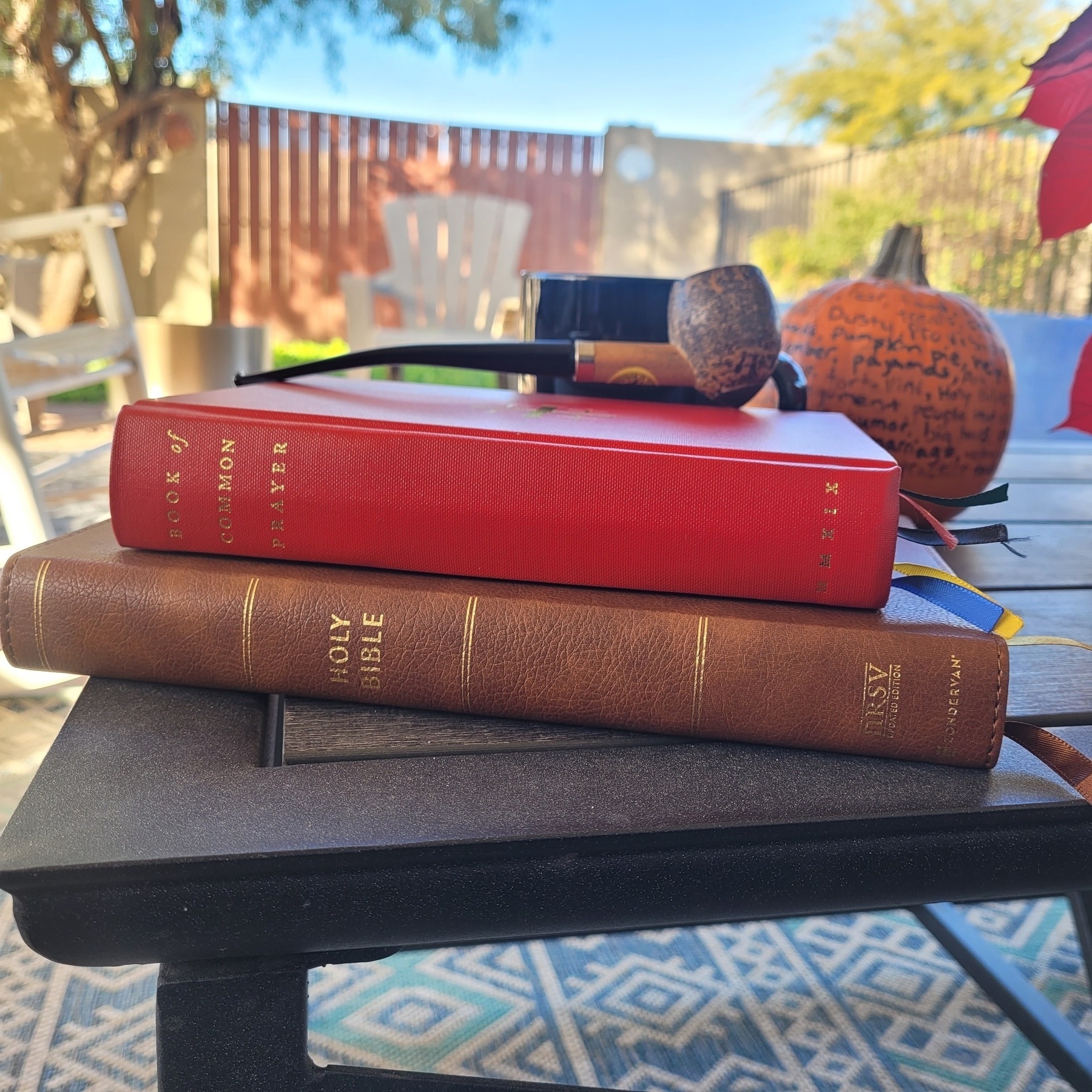
I told ChatGPT: Write a short prayer for Christian unity in the style of the Book of Common Prayer, 1662.
Result: O merciful God, who hast taught us in thy holy Word, that thou dost not delight in division, but in the unity of thy Church: grant, we beseech thee, unto thy whole Church in paradise and on earth, that, being all joined together in the same faith and in the same love, they may be united in heart and in soul, and may be one, as thou and thy Son Jesus Christ are one; who with thee and the Holy Ghost liveth and reigneth, one God, world without end. Amen.
Isaiah casts a breathtaking vision for the inevitable future that awaits us.
“He shall judge between the nations, and shall decide disputes for many peoples; and they shall beat their swords into plowshares, and their spears into pruning hooks; nation shall not lift up sword against nation, neither shall they learn war anymore.” (Isaiah 2:4, ESV)
Isaiah sees a world in which people, tired of violence and war, finally admit they are walking in darkness, that they don’t know how to move forward in the way that leads to life. In this vision, all come to the mountain of the Lord, where they finally learn how to be at peace and literally cultivate life in light of the truth of the ways of God.
It’s not as if God has ever not been teaching the world, how to live, though!
He has sent many prophets (see: the Bible).
It’s just that because of our tendency toward selfishness and self-destructiveness in our attitudes, actions, and affections, we irrationally ignore God’s life-giving word and do our own thing—even when our own thing leads to death.
This is what Jesus is talking about in Matthew:
“For as were the days of Noah, so will be the coming of the Son of Man. For as in those days before the flood they were eating and drinking, marrying and giving in marriage, until the day when Noah entered the ark, and they were unaware until the flood came and swept them all away, so will be the coming of the Son of Man.” (Matthew 24:37–39, ESV)
There’s nothing wrong with eating and drinking, marrying and giving in marriage, but the point was they did not at all change their way of life in light of what was going to happen, in light of what God was speaking to them.
Because of this, they were swept away, and quite literally missed the boat of God’s blessing and protection.
This could be any of us, at any time, if we are not careful, and if we continue to wander in the darkness of our own selfish confusion, and our self-destructive desires.
But God has not left the nations to walk in darkness. He sent us the light of his Son, Jesus Christ. He is the light, and he is the mountain where the good judgements of God take place.
St. Augustine said,
“Approach the mountain, climb up the mountain, and you that climb it, do not go down…There you will be safe, there you will be protected; Christ is your mountain of refuge ”
In his life, we see light, and we understand how to live. In his death on the cross, he condemned sin in the flesh by demonstrating the power of truly self-less love. By his Resurrection, he scatters the darkness from before our path and offers us a share in his eternal life now and forever by his Holy Spirit.
This is public knowledge!
Christ’s work is ours to receive freely by faith, and ours to share freely in word and deed with the world as we wait for all to recognize their need for mercy.
Photo by Cosmic Timetraveler on Unsplash

Even the people of God can’t govern themselves in such a way that provides for the flourishing of the community. This is because all people, including the people that God calls to himself, are infected by their own selfish and self-destructive attitudes, actions, and affections.
So even when we try to rule with the best of intentions, the most thoughtful checks and balances, the best statements of human rights, we get all twisted up in our own way. Fear, greed, and pride lead to violence, war, and death. Every time. Every purely human empire falls eventually.
So, God promises steps in to rule directly. He will appoint leaders. He will raise up a human king in the line of the best human king Israel ever had, David. This king won’t fail in all the ways that David did, morally, ethically, politically. This king will finally be faithful to God’s rule…but how?
This King will be God himself come to us, as one of us.
This King is, of course, Christ himself.
This means whatever we think we know about how kingdoms are supposed to operate, supposed to be run, supposed work, takes a back seat as we are illumined by the way of Christ…which is just so very different than the kingdoms of this world.
We could think of many ways that we would establish a kingdom. But we probably wouldn’t think of allowing our enemies, foreign and domestic, crucify us under false pretenses and forgiving them anyways.
But this is what Jesus did.
Jesus’ Kingdom is founded on forgiveness, ruled from the Cross, and advanced in the way of the Cross.
As naive and idealistic as that might sound, it’s how God does things. And his is the only Kingdom that will be left standing in the end.

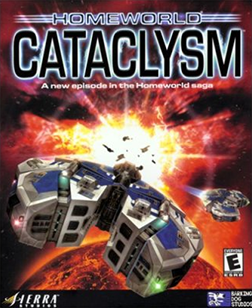
🕹️ Just finished Homeworld: Cataclysm (AKA Homeworld: Emergence) and I absolutely loved it. What a game! A different emotional experience than the original Homeworld to be sure, but a very fun ride.