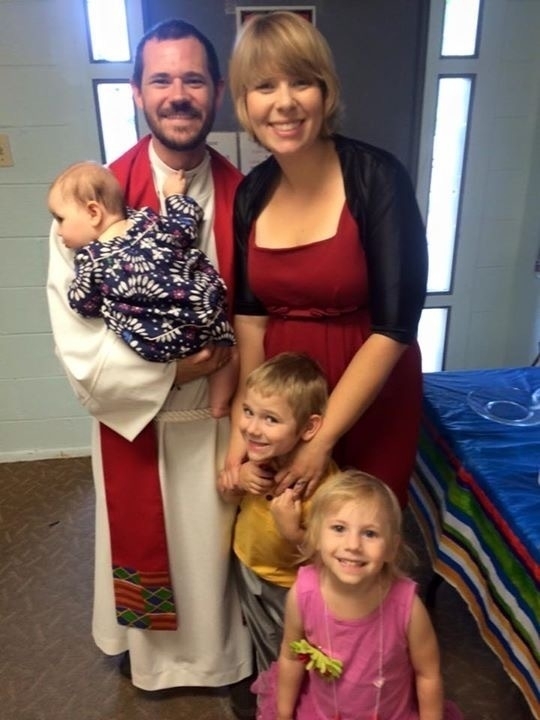
Clip of a song I wrote for my daughter, Selah.
-
Currently reading: Why We Sleep by Matthew Walker 📚
-
Without just works, our worship can’t be true
Both right worship and good works are vital, but without just works accompanying it, our worship cannot be true.
Listen to what the Lord said through Isaiah:
““What to me is the multitude of your sacrifices? says the LORD; I have had enough… Bring no more vain offerings; incense is an abomination to me. New moon and Sabbath and the calling of convocations— I cannot endure iniquity and solemn assembly. Your new moons and your appointed feasts my soul hates; they have become a burden to me; I am weary of bearing them.” (Isaiah 1:11–14, ESV)
The problem wasn’t with the offerings themselves, it was that they were vain offerings. That is, they meant nothing to the people offering them because there was no genuine repentance or turning away from evil. The problem here is the hypocrisy of blatant iniquity, and the attempt to cover it over with solemn assemblies.
So, God says,
“When you spread out your hands, I will hide my eyes from you; even though you make many prayers, I will not listen; your hands are full of blood.” (Isaiah 1:15, ESV)
We can’t cover our selfish, self-destructive attitudes, actions, and affections with ritual, ceremony, or even creeds. Saying the right things, and knowing the right things are not the same thing as truly believing the word of God. Truly believing the word of God is always worked out into actions that reflect the character of God as good, compassionate, just, and merciful.
This is the first thing that God desires to please him. Right worship and ceremony can support and reflect a life lived in imitation of God, but to quench the Spirit’s leading toward this in the liturgy is nothing less than a rebellion against the living God.
Sisters and brothers, we will not win that fight.
“…the Lord Jesus…[will be] revealed from heaven with his mighty angels in flaming fire, inflicting vengeance on those who do not know God and on those who do not obey the gospel of our Lord Jesus. They will suffer the punishment of eternal destruction, away from the presence of the Lord and from the glory of his might,” (2 Thessalonians 1:7–9, ESV)
Evil will be cast out of existence, and if we keep holding on to evil, we will also experience the punishment of that purifying fire.
On our own, we have an inevitable tendency to hold on to evil. To return again to our sinful, selfish, self-destructive ways. Yet God in his mercy sent his Son to forgive us of our sins, to heal us from its effects, to set us free to orient our lives toward justice and life. ““Come now, let us reason together, says the LORD: though your sins are like scarlet, they shall be as white as snow; though they are red like crimson, they shall become like wool.” (Isaiah 1:18, ESV)
This is confirmed in a Gospel passage from Luke 19. This is the wonderful story of Zacchaeus the cheating tax collector who, upon encountering Jesus, does a complete 180. He turns from his sin and makes everything right, going above and beyond as he restored all he owed to those he cheated.
“…Jesus said to him, “Today salvation has come to this house, since he also is a son of Abraham. For the Son of Man came to seek and to save the lost.”” (Luke 19:9–10, ESV)
Notice the salvation here isn’t being swept out of this world, but rather things being as they should be in this world.
This is what is possible in the present as we trust that Jesus’ is indeed the pattern for all humanity. This what we are saved into when we receive the forgiveness of our own sins that Jesus offered on the cross, even has as he was unjustly murdered. This is how we are freed to live as we receive the same Holy Spirit that raised Jesus from dead.
It’s this experience of forgiveness and real change of heart and life that confirms the promised hope that this work of the renewal of all things has only just begun, and will indeed be completed when Jesus comes again.
It is the grace of God in Christ that makes it possible for us to “cease to do evil, learn to do good; seek justice, correct oppression; bring justice to the fatherless, [and] plead the widow’s cause.” (Isaiah 1:16–17, ESV).
-
4 parts of making peace with discernment
I think the church today would do well to emulate these practices that are evident from the Jerusalem Council in Acts 15:
-
Entering a process of discernment that includes debate, remembering core doctrine, and careful listening
-
Judgment made and articulated in light of Gospel experience and Scriptures by an authorized and trusted representative of the church.
-
Compromise for the sake of relational and public unity.
-
Clear communication not only in a published statement, but via relational face-to-face interactions
-
-
My next “laptop” will probably be a Galaxy Tab S8.
I’ve been using my 2019 Galaxy Tab A 10.1 for some actual work lately and I’m surprised that it actually performs satisfactorily.
No, it’s not a fluid as my Windows laptop, especially when it comes to file management, but the trade-off for portability and battery life are compelling…
-
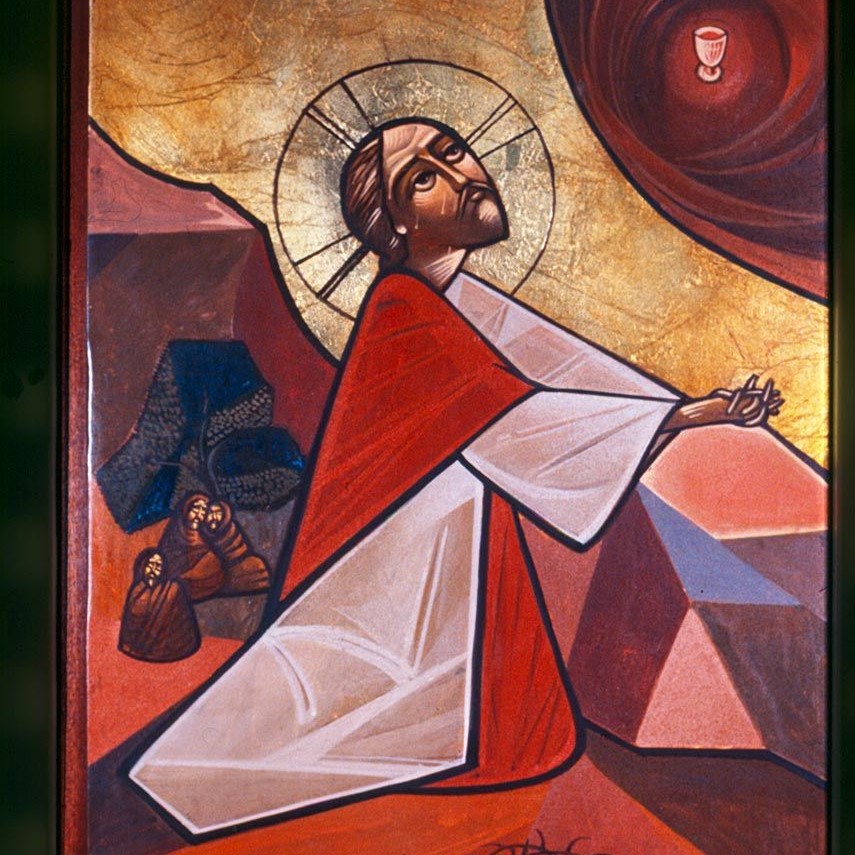
Practice what you pray
Prayer is what grounded and energized Jesus’ life of action for the sake of the world.
Jesus practiced what he preached and what he prayed.
He was faithful in prayer; we read about it throughout the Gospels.
He also took action as he healed the sick, threw out the dishonest money changers from the temple, restored dignity to prostitutes, elevated the value of children, and even stood against the death penalty for an adulterous woman.
Almost every time, someone was there to critique Jesus harshly, even as he was modeling and working true justice in the world. But St. Peter says,
“When he was reviled, he did not revile in return; when he suffered, he did not threaten, but continued entrusting himself to him who judges justly.” (1 Peter 2:23, ESV)
When we follow the story of Jesus closely, we realize the world has no shortage of unjust judges. We realize so often we are the unjust judges, trying to justify our own selfish and destructive attitudes, actions, and affections, regardless what that means for ourselves or those around us.
Jesus entrusted himself to Justice, to God, as he submitted even to the unjust judgement of sinful and selfish human beings, giving his very life on a Roman cross.
Yet as we were wrongly proclaiming him guilty, he was freely forgiving every sin. As we were condemning him to death, he was taking death itself with him to the grave.
His love was so great, that it endured the greatest injustice imaginable, and began to bend the universe back into the shape it should be. He rose from the dead in vindication that love and forgiveness and mercy triumph over judgement.
In this, he accomplished true justice. Not in the sense that everyone gets what they deserve—if that was the case no one could be saved, because we all truly deserve to be judged and condemned by our sins.
But Jesus accomplishes justice in the sense that he is setting things right in the world, robbing death of its power, and replacing it with the certain hope of renewal of all things as sheer gift of undeserved grace from God.
-
The Word of God is not bound
St. Paul, in his first letter to Timothy in the first chapter and second part of verse nine writes:
The word of God is not bound.
How does God speak his good word to us? In the Bible, the author of the book of Hebrews says,
“Long ago, at many times and in many ways, God spoke to our fathers by the prophets, but in these last days he has spoken to us by his Son, whom he appointed the heir of all things, through whom also he created the world. He is the radiance of the glory of God and the exact imprint of his nature, and he upholds the universe by the word of his power… (Hebrews 1:1–3, ESV)
You see, in the ultimate and most important sense, Jesus is the word of God that cannot be bound. All the Scriptures are words of God that refer to the Word that is God come to us as one of us. The Gospel writer John said,
“In the beginning was the Word, and the Word was with God, and the Word was God. He was in the beginning with God. All things were made through him, and without him was not any thing made that was made. In him was life, and the life was the light of men. The light shines in the darkness, and the darkness has not overcome it.” (John 1:1–5, ESV)
You see, Jesus is the very word of God, the personal creational power and pattern of all existence, made incarnate, enfleshed, inseparably uniting complete divinity with full humanity forever.
So, Jesus forgives our sins. Jesus heals our wounds. Jesus draws people into a new community.
Jesus lived as every human is meant to live, even when that meant he would die because we would reject him. So we nailed him to a cross and lifted him from the earth to show the world, it would be our way, the way of death, that would reign.But Jesus would not and could not be bound by our sin. Jesus would not and could not be bound by even death, so he broke the bonds of death, trampling Hell and Satan under his feet. The word of God is not bound!
Yet, Jesus binds us to him, so that:
“… if we have died with him, we will also live with him; if we endure, we will also reign with him; if we deny him, he also will deny us; if we are faithless, he remains faithful— for he cannot deny himself.” (2 Timothy 2:11–13, ESV)
-
Logos 10 was just released, and while there are some nice updates….the Sermon Builder feature still doesn’t support footnotes or citations, although it will link back to the source of copy-and-pasted quotes in the app.
The fact this wasn’t built in from get go is incredibly frustrating and kind of weird for an app that is all about research.
Most preachers I know want a record of their sermon that properly cites their sermons for archiving, publication, and sharing.